
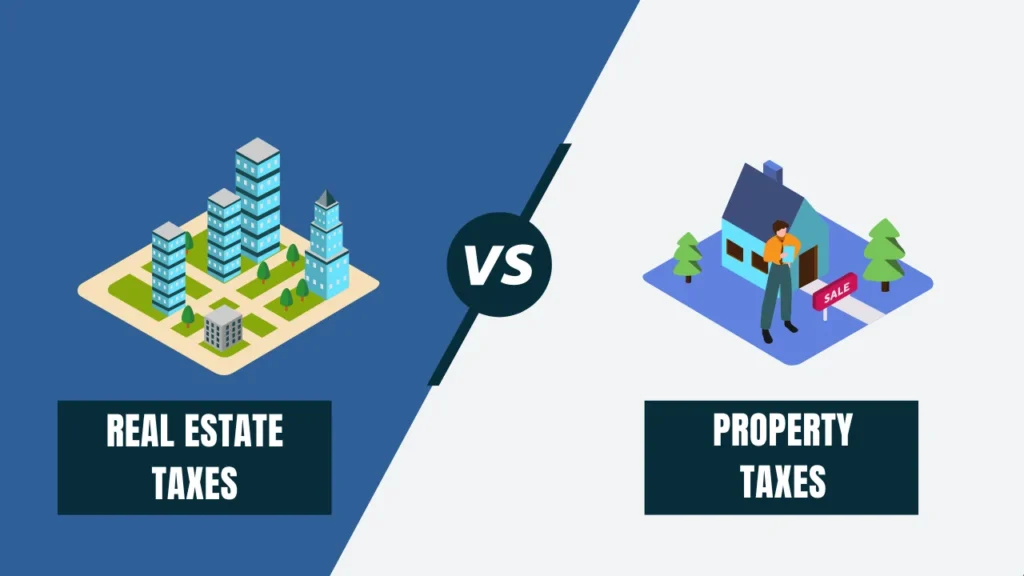
If you own a home, you are likely familiar with the annual bill for what you probably call “property tax.” It’s a significant cost of homeownership, and the terms “property tax” and “real estate tax” are often used interchangeably in everyday conversation. This common mix-up leads to a crucial question: is property tax and real estate tax the same thing? The answer is no, and the distinction is more important than you might think.
While real estate tax is a *type* of property tax, the term “property tax” is a broad umbrella that covers more than just your house and the land it sits on. It also includes taxes on your movable assets, like cars, boats, and business equipment. Understanding the difference between property tax and real estate tax is key to managing your finances, identifying potential deductions, and navigating the world of asset ownership. This guide will clarify the definitions, explain what is taxed under each category, and break down why this distinction matters to you.
The Big Picture: What is Property Tax?
Think of “property tax” as the parent category. It is a broad tax levied by local governments (like counties, cities, or school districts) on a person’s or business’s property. The revenue generated from these taxes is essential for funding public services, including schools, police and fire departments, road maintenance, and local infrastructure projects.
Property tax is split into two main subcategories based on the nature of the property being taxed: real property and personal property. This is where the confusion often begins. Your house falls into one category, while your car falls into the other, but both are subject to a form of property tax.
A Deep Dive into Real Estate Tax
Real estate tax is the tax levied on “real property.” Real property is defined as land and any permanent structures attached to it. This includes your house, garage, in-ground swimming pool, and any other fixed improvements. It is immovable property.
When people complain about their high “property taxes,” they are almost always referring to their real estate tax bill. This tax is a primary source of funding for local governments and is based on the assessed value of your home. Each year, your local tax assessor determines the value of your property, and that value is multiplied by the local tax rate (or millage rate) to calculate your annual real estate tax liability. This tax is a cornerstone of public funding, and its principles are as foundational as those in major real estate developments like Emaar Avarra by Palace.
Understanding Personal Property Tax
Personal property tax is the other side of the coin. It is a tax levied on movable assets. Unlike real estate, personal property is anything you own that is not permanently fixed to land. The rules for personal property tax vary significantly by state; some states tax a wide range of personal items, while others tax very few or none at all.
Common items subject to personal property tax include:
– Vehicles (cars, trucks, motorcycles)
– Recreational vehicles (RVs, campers)
– Boats and personal watercraft
– Airplanes
– Business assets (machinery, equipment, office furniture)
– Farm equipment
For most individuals, the most common encounter with personal property tax is the annual fee paid when registering a car. This tax is also based on the assessed value of the item, which typically depreciates over time.
Key Differences: Real Estate Tax vs. Personal Property Tax
Now that we have the definitions, let’s summarize the core differences to make it clear.
1. What is Taxed: Real estate tax applies to immovable property (land and buildings). Personal property tax applies to movable property (vehicles, boats, equipment).
2. Common Usage: While technically incorrect, people often use “property tax” to refer specifically to their real estate tax. “Personal property tax” is a more specific term used for taxes on movable items.
3. Tax Rates and Value: Real estate taxes are typically much higher than personal property taxes. This is because homes and land generally have a much higher value than movable assets and are taxed at a different rate.
4. Tax Deductibility: On your federal income tax return, you may be able to deduct the real estate taxes you paid on your primary residence if you itemize deductions. While some state and local personal property taxes may also be deductible, the rules are different, and the amounts are usually much smaller.
How Are These Taxes Calculated?
Both taxes rely on a similar formula: Assessed Value × Tax Rate = Tax Owed.
For real estate tax, a local tax assessor determines the market value of your home and land. This value is then multiplied by an assessment ratio (a percentage set by the municipality) to get the “assessed value.” That assessed value is then multiplied by the local tax rate to determine your bill.
For personal property tax, the process is similar. For a car, for example, its value is often determined using a standard guide that accounts for its age, make, and model. This value is then multiplied by the local personal property tax rate.
Tax Deductions: What Can You Claim?
The ability to deduct these taxes is a significant difference. Under the Tax Cuts and Jobs Act, homeowners can deduct up to $10,000 per household per year in state and local taxes (SALT), which includes property taxes. This deduction primarily applies to real estate taxes on your main home or vacation home.
Deducting personal property taxes is more restrictive. You can only deduct state and local personal property taxes if the tax is based solely on the value of the property (an *ad valorem* tax) and is charged on an annual basis. The tax you pay on your car registration often qualifies.
The Special Case of Mobile Homes
Mobile homes present a unique situation that perfectly illustrates the difference between these two taxes. If you own a mobile home but lease the land it sits on, the mobile home itself is considered personal property because it is movable. You would pay personal property tax on it.
However, if you own both the mobile home and the land it is permanently affixed to, the entire property (land and home) is classified as real property and is subject to real estate tax. This single example shows how the “movable vs. immovable” rule is the defining factor.
Frequently Asked Questions (FAQs)
Is my car registration fee a property tax?
In many states, yes. The portion of your annual car registration fee that is based on the value of your vehicle is a form of personal property tax. This portion may be deductible on your federal tax return.
Do all states have personal property tax?
No. The rules vary widely. While most states have real estate taxes, many states have eliminated the personal property tax on most items for individuals (like household furniture). However, most states still tax vehicles, and nearly all tax business-owned personal property.
Can I fight my real estate tax assessment?
Yes. If you believe your home’s assessed value is higher than its true market value, you have the right to appeal the assessment. A successful appeal can lower your assessed value and, consequently, your real estate tax bill.
Is real estate tax included in my mortgage payment?
Often, yes. Many lenders require borrowers to have an escrow account. A portion of your monthly mortgage payment goes into this account, and the lender uses the funds to pay your real estate taxes and homeowner’s insurance on your behalf.
What is the difference between real property and personal property?
The simplest distinction is mobility. Real property is land and things permanently attached to it (like a house). Personal property is everything else you own that is movable (like a car, furniture, or a boat).

